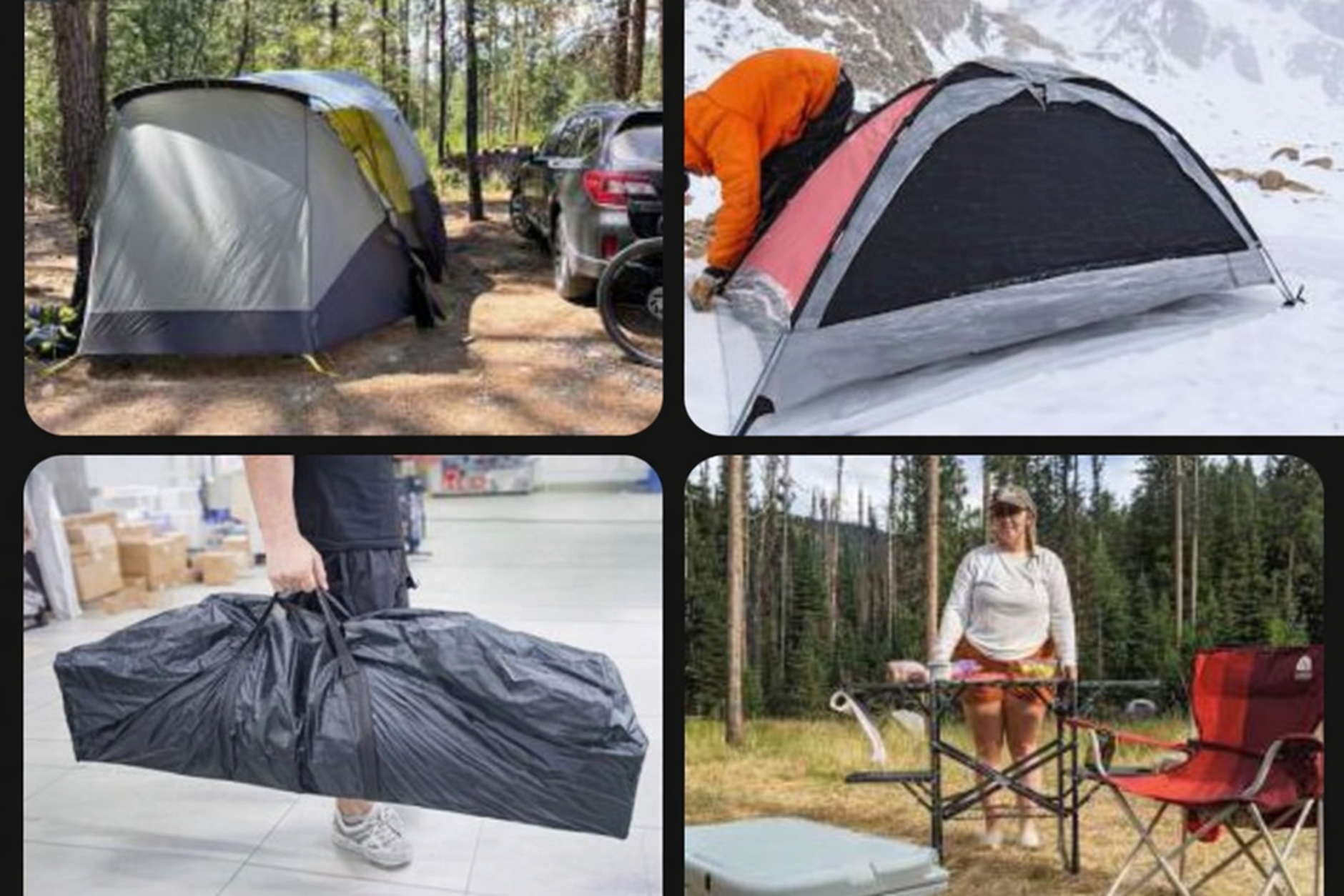
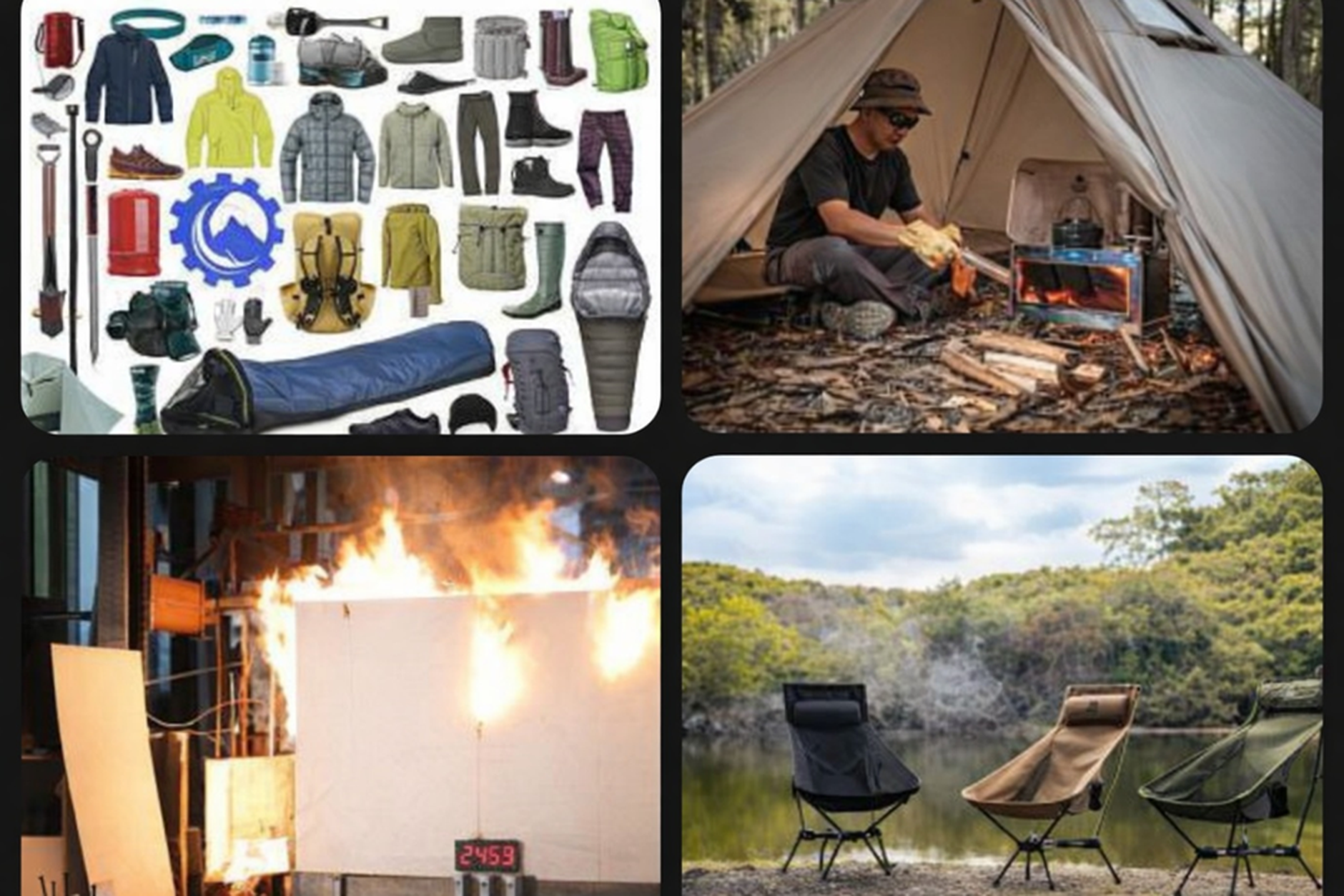
These are practical items that inspectors must check before finished products are shipped.
👉 Key Camping Gear Inspection Guide
1. Tent Waterproofing and Water Pressure Testing
This process checks how well tent fabric can withstand heavy rain. Water pressure is applied to the reverse side of the fabric to identify the point at which droplets appear, or artificial rain is sprayed over a completed tent to check whether water leaks through seams and seam sealing.
2. Load Testing for Camping Chairs and Tables
This test confirms whether a product can safely support a user’s weight. Specified weights are placed on the product, or repeated pressure is applied, while inspectors check for frame deformation or damage at connection points.
3. Outdoor Environment Simulation and Durability Testing
Products are tested under conditions that simulate harsh outdoor use, including wind-tunnel testing for strong winds and light fastness testing to assess fabric discoloration caused by sunlight. Camping gear requires a much higher level of durability than ordinary household furniture.
4. Component and Operation Check, or Final Audit
Inspectors carefully check pole connection, zipper smoothness, and whether accessories such as pegs and ropes are missing before shipment.
5. Furniture Durability and Fatigue Testing
This test recreates repeated sitting or repeated load on camping chairs and tables. Thousands of pressure cycles may be applied to check frame deformation and wear at connection points, helping assess long-term durability.
5. Tent Fabric Flame Resistance and Heat Testing
Given the frequent use of fire in camping environments, tent fabrics are tested to assess how quickly flames go out or how fast fire spreads after contact. This is a critical safety inspection directly linked to user safety.
6. Gas Tightness Testing for Stoves and Combustion Equipment
Gas stoves and lanterns are inspected with detection equipment to identify even minor leakage from connection points. The process also checks whether products remain safe under heat-related expansion and pressure changes outdoors.
7. Material Chemical Analysis
Coated cookware and tableware are checked to confirm whether hazardous substances, including lead, cadmium and perfluorinated compounds, migrate from the product. This inspection has become increasingly important as environmental and human-safety standards have tightened.