LOGIN

Sitemap

Robot Inspection System

Robot Inspection Systems for Smart Quality Control in Apparel

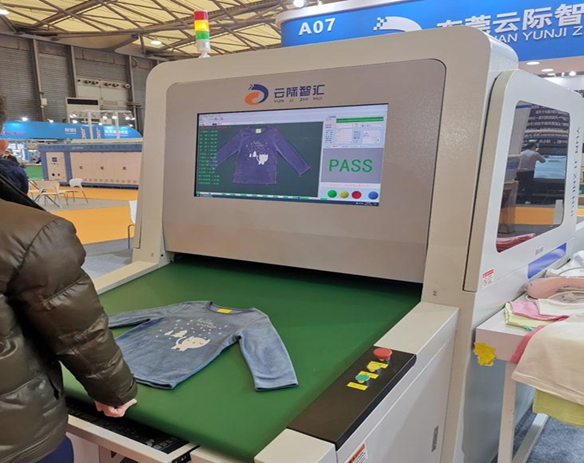
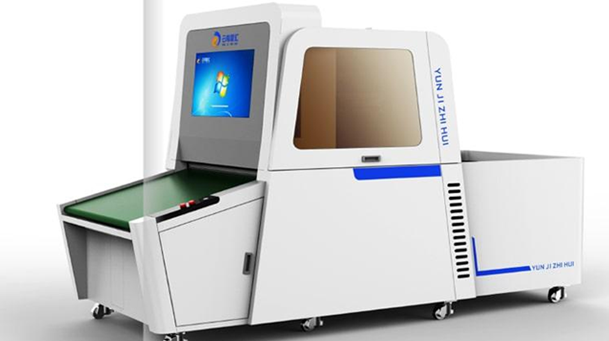
In apparel manufacturing, a robot inspection system is a smart quality-control system that automatically inspects appearance, dimensions, sewing quality and functional details in finished garments, including shirts, trousers and outerwear. By combining robotics, AI and 3D vision, the system enables precise and consistent judgement without the variation that can occur in manual inspection.

1. Overview of an Apparel Robot Inspection System

👉 In production lines or final inspection processes, robots handle garments and make automated quality decisions.
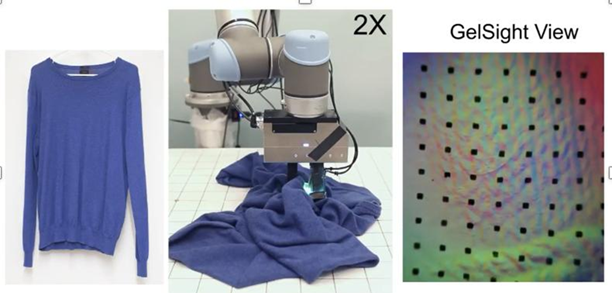
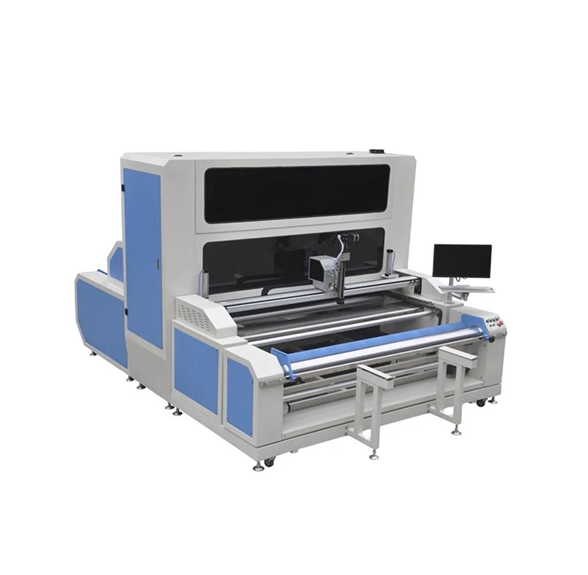
  • Replacement and support for human inspection: Reduces misjudgement caused by differences in inspector skill or physical condition and enables uniform quality inspection around the clock
  • Non-contact inspection focus: Uses high-resolution cameras and sensors to verify delicate apparel materials without causing damage
  • Automatic data recording and management: Digitises all inspection results, improving quality traceability and supporting process optimisation
2. Main Inspection Items

👕 Appearance Inspection: the Core Process

  • Stains: Detects fine stains, oil marks and similar contamination that may occur during production or handling through high-precision pixel analysis
  • Holes and tears: Automatically identifies fine holes or fabric damage that may be difficult to detect with the naked eye
  • Colour and wrinkles: Analyses colour inconsistency and abnormal wrinkles or shape distortion caused by poor pressing or finishing

✂️ Sewing Quality Inspection

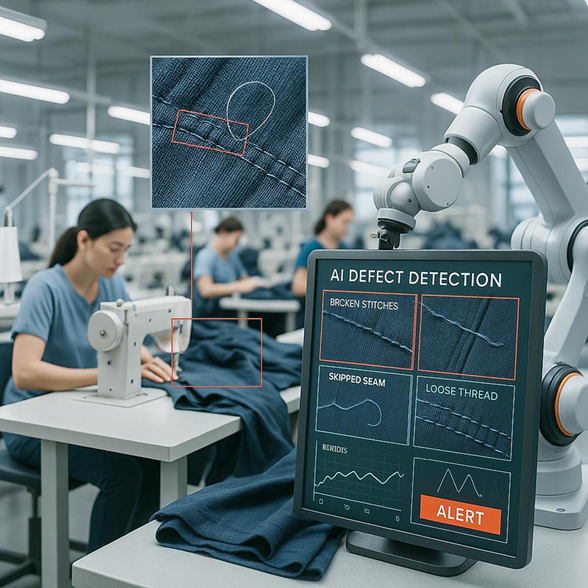
  • Sewing defects: Uses robot vision to conduct full inspection for finishing defects, including loose threads and seam departures
  • Puckering: Measures three-dimensional fabric distortion that appears along sewing lines
  • Stitch interval: Quantifies stitch uniformity and spacing accuracy to confirm compliance with specifications

📏 Dimensional and Shape Inspection: the 3D Core

  • Overall dimensional measurement: Analyses differences between actual garment dimensions and design specifications, including total length, chest width and shoulder width
  • Pattern alignment: Verifies left-right symmetry and pattern matching in products with checks, stripes and other repeat patterns
  • Wear fit: Quantitatively evaluates silhouette and volume during actual wear based on 3D data

🏷️ Trims and Label Inspection

  • Label and OCR: Uses optical character recognition to check the position and text accuracy of care labels and size tabs
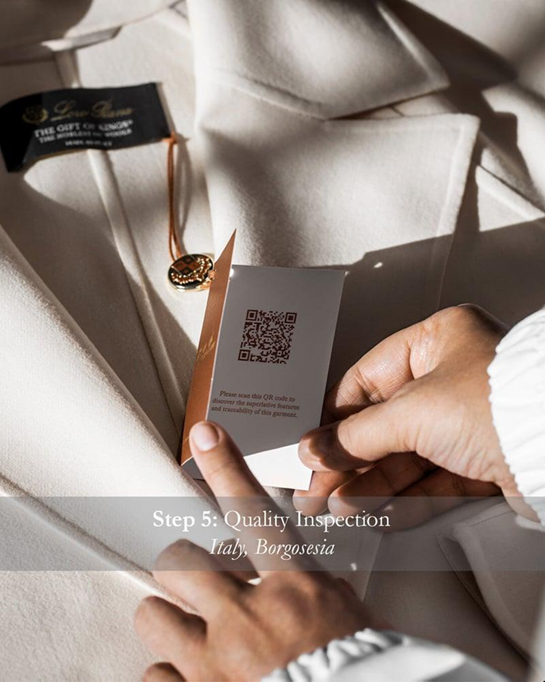
  • Code verification: Checks barcode and QR-code readability and verifies linked data in real time
  • Missing trims: Confirms whether required trims such as buttons, zippers and patches are attached and correctly positioned
3. System Components and Inspection Process
Core System Components
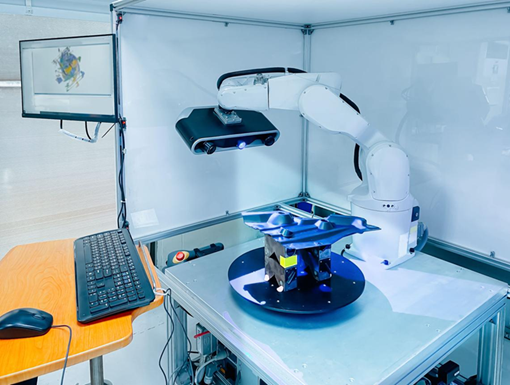
  • 🤖 Robot: Multi-axis robot designed for precise garment pick-up and optimal inspection angles
  • 📷 Vision: Hybrid vision system combining 2D high-resolution cameras and 3D laser scanners
  • 🧠 AI analysis: Deep-learning image processor that learns and classifies defects autonomously
  • 🧵 Auxiliary device: Vacuum suction and tension-control grippers that provide uniform fabric tension
Inspection Process
  1. 1. Garment input: Products enter the system automatically or manually in connection with the production line
  2. 2. Handling: The robot picks up the garment and spreads it flat to prevent shadowing
  3. 3. Imaging and scanning: Multi-layer data is collected through multi-angle cameras and 3D sensors
  4. 4. AI judgement: The system compares results with learned defect patterns and automatically determines defect type and grade
  5. 5. Sorting and storage: Products are automatically sorted as pass or fail, and quality reports are stored
4. Implementation Benefits and Future Technology Trends
5. Expected Benefits of System Implementation
  • Maximised productivity: Inspection speed far beyond manual work improves line efficiency
  • Standardised quality: Eliminating differences in individual inspection standards strengthens brand reliability
  • Reduced cost risk: Helps prevent and reduce post-sale claims and return costs
  • Smart-process readiness: Responds to global fashion brands’ demand for digital proof of quality
6. Application Stages by Process
  • Inline sewing inspection: Mid-process monitoring to prevent defects from accumulating
  • Final finished-goods inspection: Full inspection to verify overall product completion before shipment
  • Quality gate: Final-stage defect-free quality assurance before packaging and box storage
7. Latest Technology Trends
  • Advanced AI deep learning: Increasingly intelligent systems that can detect undefined and irregular defects
  • Digital twin and fit analysis: Wear-fit prediction through virtual modelling that mirrors the physical garment
  • Collaborative robots, Cobots: Hybrid systems that work safely on the same line as human inspectors
  • Integrated control: Smart-factory implementation through real-time data exchange with MES and ERP systems
8. Technical Limitations and Challenges
  • Algorithms must be further improved to control unpredictable wrinkles caused by the flexibility of apparel products
  • Automated learning-model generation is required to respond quickly to high-mix, low-volume production environments

Contact Information

Reception: 031-212-0234 / kafti@kafti.or.kr
Manager: Senior Researcher Eunjeong Gong (010-4250-0365)
Director: Research Institute Director Seunghyuk Baik (010-4802-6453)
President: President Eunsu Kim (010-8756-7379)

회원로그인

회원가입